🧵Repairing a 25-year-old carpet is not about hiding damage — it’s about rebuilding it properly.
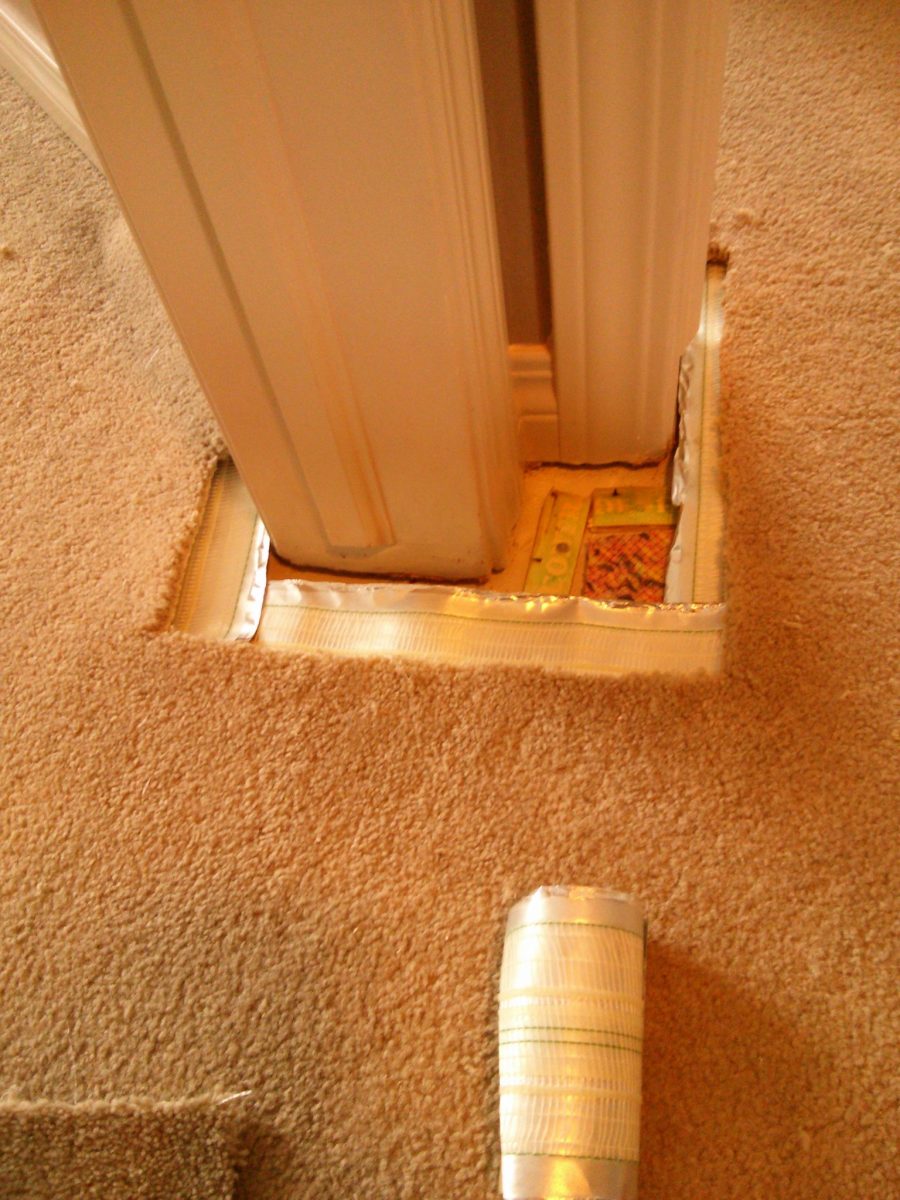
In this case, the homeowner had already cut out a large section of carpet due to previous damage. The area was completely open, leaving a noticeable gap in the floor. Instead of replacing the entire carpet, they had kept leftover material from the original installation — and called me to reconstruct the damaged area properly.
Older carpet repairs require precision. Colour, wear, and pile direction all matter.
✅ Before & After – Large Carpet Patch Reconstruction

The Situation
This wasn’t a small burn mark or a minor tear.
The customer had removed a large section of carpet, leaving:
- An exposed subfloor
- Uneven cut edges
- Loss of structural tension
- A highly visible gap
With a 25-year-old carpet, replacing the entire room would have been expensive and unnecessary if reconstruction could be done correctly.
The Advantage: Original Spare Carpet
Many homeowners throw away leftover carpet after installation. In this case, keeping the spare material made all the difference.
The leftover carpet:
- Matched the original dye lot
- Matched pile structure
- Allowed proper reconstruction instead of compromise
Without original material, matching a 25-year-old carpet would have been extremely difficult.
How CarpetFix Reconstructed the Area
Large-area patching is different from small spot repairs. The process required:
- Cleaning and straightening the previously cut edges
- Preparing the spare carpet to match pile direction
- Carefully trimming and dry-fitting the section
- Installing using proper seam bonding methods
- Restoring tension across the repaired area
The key was blending old wear patterns with the donor piece so the patch did not stand out.
Working With 25-Year-Old Carpet
Older carpet presents unique challenges:
- Fibres are more compacted
- Colour may have slightly faded
- Backing is more fragile
- Seam placement must be strategic
A careless patch on older carpet will show immediately. This repair required patience, alignment, and controlled seam placement to make the reconstruction natural.
The Result
After the reconstruction:
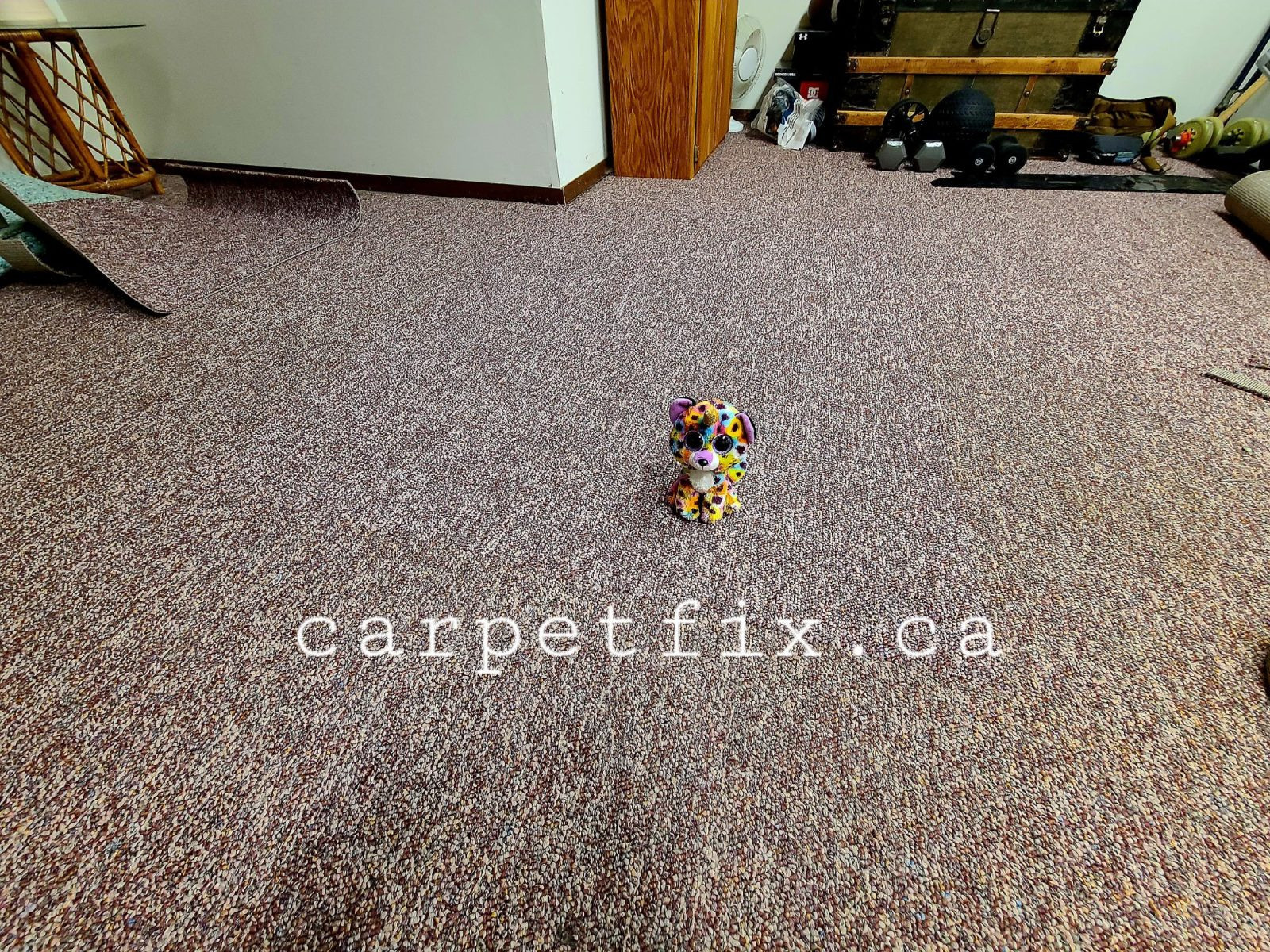
- The large missing section was completely restored
- The carpet looked continuous again
- The patch blended impressively for its age
- No full replacement was necessary
The customer was so impressed with the result, I received a bottle of wine as a thank-you — which says more than any advertisement ever could.
Q & A – Repairing Old Carpet
Q – Can 25-year-old carpet be repaired?
A – Yes, if matching material is available and the repair is done carefully.
Q – Will a large patch be noticeable?
A – With proper pile alignment and seam control, large patches can blend very well — even in older carpet.
Q – What if I don’t have spare carpet?
A – Closet donor pieces are often an option, but original leftover carpet is always best.
Q – Is repair cheaper than replacement?
A – In most cases, yes — especially when only one section is damaged.
The Takeaway
Old carpet doesn’t automatically mean replacement. With the right approach and proper donor material, even a large cut-out section can be reconstructed cleanly and professionally.
Sometimes the best compliment isn’t a review — it’s a bottle of wine left at the door.
Need Carpet Reconstruction or Large Patch Repair in Calgary?
If part of your carpet has been removed, cut out, or damaged — even in older carpet — CarpetFix can assess whether reconstruction is possible before recommending replacement.
📍 Serving Calgary & Surrounding Areas
🧰 Large carpet patches • Reconstruction • Seam restoration • Older carpet repair
📞 Send a standing photo and a close-up of the damaged area.
We’ll tell you what’s realistic.
Links To Our Core Services
Dog Damage at a Home Theater Entrance — When Simple Carpet Repair Beats Overcomplicated Solutions
When Carpet Damage Looks Worse Than It Really Is A homeowner recently contacted us after their dog ripped...
Read more25-Year-Old Carpet Repaired – Large Cut-Out Area Professionally Reconstructed
🧵Repairing a 25-year-old carpet is not about hiding damage — it’s about rebuilding it properly. In this case,...
Read moreIron Burn Carpet Repair in Calgary – Fix Scorched & Melted Carpet Without Replacement
Iron burn carpet repair in Calgary is one of the most common accidental damage calls I receive —...
Read moreWhen DIY Carpet Repairs Go Wrong — and How CarpetFix Makes It Right
🧩 When a DIY Carpet Repair Doesn’t Go as Planned Sometimes good intentions lead to bad carpet repairs....
Read more